The First Trimester - What Happens During Weeks 1-12

The first trimester of pregnancy begins from week 1 to 12 and is a critical period of development for both the baby and the mother. Here is a week-by-week summary of what happens during each week of the first trimester:
Weeks 1-2: Conception and early development
What happens:
These first two weeks technically occur before conception. The first day of your last period marks the beginning of the pregnancy timeline, although you are not yet pregnant during these weeks.
Ovulation usually occurs around week 2. If sperm meets the egg, fertilization occurs and the fertilized egg begins its journey down the fallopian tube toward the uterus. After fertilization, the egg becomes a zygote and begins to divide into multiple cells.
Week 3: Implantation
What happens:
The fertilized egg (now called a blastocyst) reaches the uterus and begins to implant in the uterine lining.
This is when pregnancy begins at the cellular level and the body begins to produce human chorionic gonadotropin (hCG), the hormone detected in pregnancy tests.
By the end of the week, the placenta begins to form, which will provide nutrients and oxygen to the developing baby.
Week 4: Missed periods and early symptoms
What happens:
The blastocyst is now embedded in the uterine wall and early pregnancy symptoms may begin to appear, such as nausea, fatigue, breast tenderness, and mild cramps.
A missed period is usually the first visible sign of pregnancy and many women take a pregnancy test around this time.
hCG levels are rising, confirming the pregnancy.
Week 5: Heartbeat and early organ development
What happens:
The embryo is the size of a sesame seed and is growing rapidly.
The baby's heart begins to beat, although it may not yet be visible on a Doppler device.
The neural tube, which becomes the brain and spinal cord, is forming and the basic structure of the baby's organs begins to develop.
Morning sickness (nausea and vomiting) often begins around this time due to hormonal changes.
Week 6: Rapid development
What happens:
The embryo is now developing a distinct shape and facial features such as the eyes, nose, and mouth are forming.
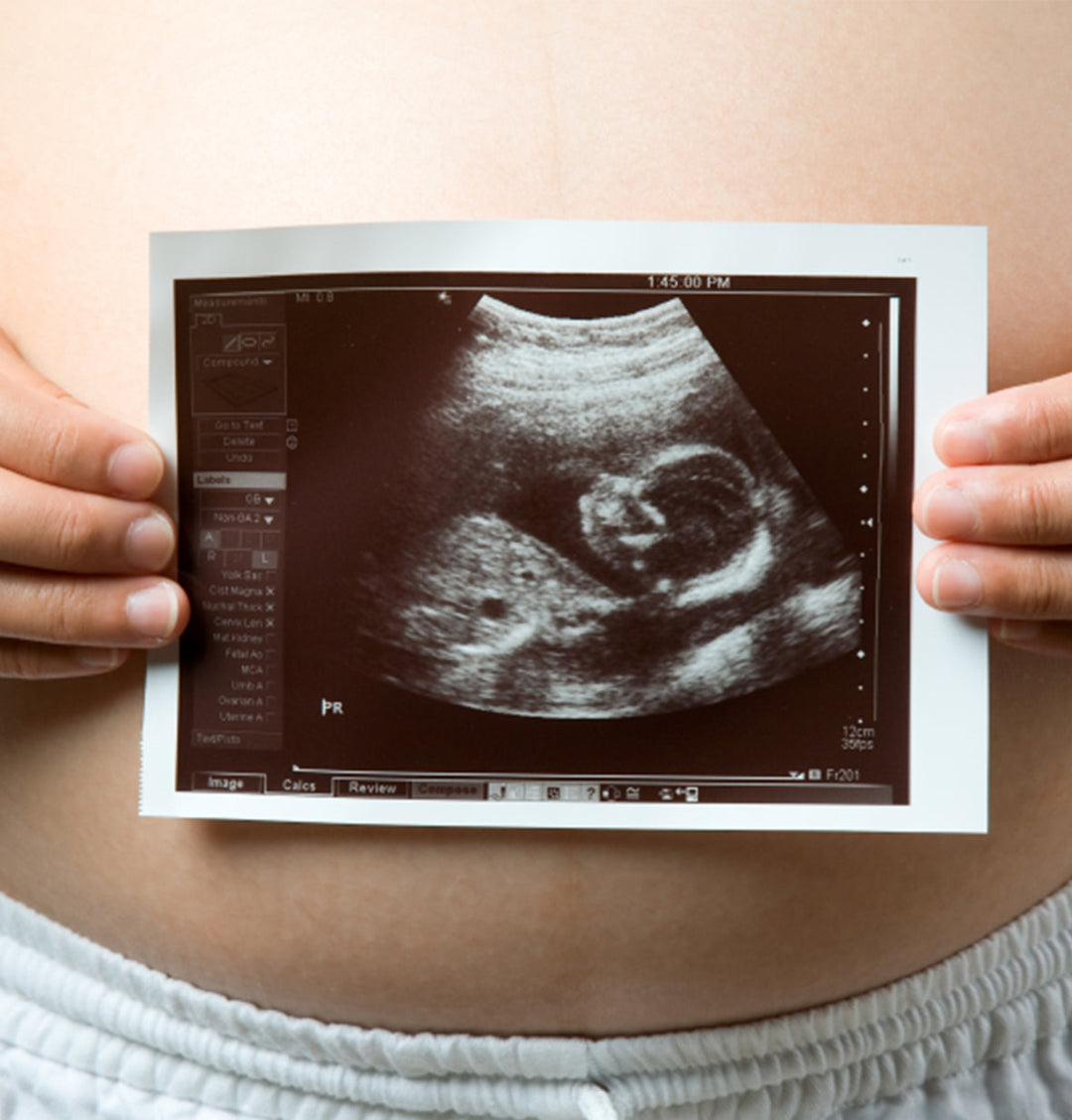
The heart beats at a rapid pace and may be visible on an ultrasound.
The limb buds appear, which will later develop into arms and legs.
The placenta continues to develop, taking on the task of nourishing the baby.
Week 7: Brain and organ development
What happens:
The baby's brain and spinal cord are growing rapidly. By the end of this week, the neural tube is fully formed and the early development of the baby's brain and nerves is underway.
The arms and legs continue to develop and the tiny "fingers" begin to form.
The baby is about the size of a blueberry or a small grape.
At this stage, you may experience more noticeable pregnancy symptoms such as fatigue, nausea, and emotional changes.
Week 8: Growth and baby symptoms
What happens:
The embryo is now officially called a fetus and its vital organs (heart, lungs, kidneys, liver) continue to develop.
The baby's heart is fully formed and pumps blood throughout the body.
The baby's eyes are fully formed, but still closed, and the ears have begun to take shape.
Pregnancy symptoms such as fatigue, vomiting, mood swings, and breast tenderness may be at their peak.
The baby is about the size of a raspberry.
Week 9: Development and major features
What happens:
The baby is the size of a strawberry and has a more defined shape.
The limbs are growing longer and begin to bend at the elbows and knees. The hands and feet are forming with small bumps that will become fingers and toes.
The baby's facial features become more distinct and the eyes are developing color and pigmentation, although they remain closed.
The baby has begun to make small, involuntary movements, although you cannot yet feel them.
Your pregnancy symptoms may include frequent urination, a soft belly, and emotional changes.
Week 10: Organ and system maturation
What happens:
The baby's organs continue to mature and the liver begins to produce alkaline fluid..
The bones and cartilage in the arms and legs are strengthening.
The baby's fingers and toes are fully formed and can now be felt slightly.
The baby is now officially a fetus and development continues at a rapid pace.
Your body may still be experiencing early pregnancy symptoms such as morning sickness, an enhanced sense of smell, and fatigue.
Week 11: Formation of external features
What happens:
The baby is the size of a fig and weighs approximately 14 grams.
Most of the baby's vital organs are functioning and the intestines have begun to move into their proper place.
The baby's skin is very thin and translucent, and the small blood vessels are visible.
The baby may move more, although it is still too early for the mother to feel the movements.
The risk of miscarriage decreases significantly at this point, as the baby's organs are becoming more fully formed.
Week 12: End of the first trimester
What happens:
The baby is about 2.5 to 5 cm long and weighs approximately as much as a marshmallow.
External features, such as the nose, lips, and eyelids, are more developed and the eyes are almost in their final position.
The baby may be practicing sucking and swallowing.
Most critical organs have developed and the baby is beginning to look more human.
At the end of week 12, the first trimester ends and the risk of miscarriage decreases significantly.
Many women begin to feel better at this time as symptoms such as morning sickness begin to disappear.
Key measures for the first trimester:
Physical changes: Hormonal changes lead to early pregnancy symptoms such as nausea, fatigue, breast tenderness, and mood swings. Blood flow increases and the body begins to adapt to support the growing baby.
Baby's development: The major organ systems form and the baby begins to take shape, with the heart beating and all vital organs beginning to function.
Key pregnancy points: The end of the first trimester marks the end of the period with the highest risk of miscarriage, and is often when many women begin to share their pregnancy news.
It is an exciting and rapidly changing time, with the foundations for a healthy pregnancy being laid in these early weeks.